

Swiss Clinic
Menu
Swiss Medical

Dermatology

Specialist evaluation and treatment of skin, hair, and nail concerns, moles, inflammatory and infectious skin conditions, and sexually transmitted infections.

Dermatology services

Noticed a change in your skin? Have it examined by a dermatologist

Skin conditions can appear in many different forms, including itchy or flaky patches, persistent redness, acne, infections, warts, changing moles, and hair or nail problems. All of these may warrant a dermatological examination. The purpose of a specialist consultation is to identify the underlying condition, determine whether further testing is necessary, and recommend appropriate treatment.

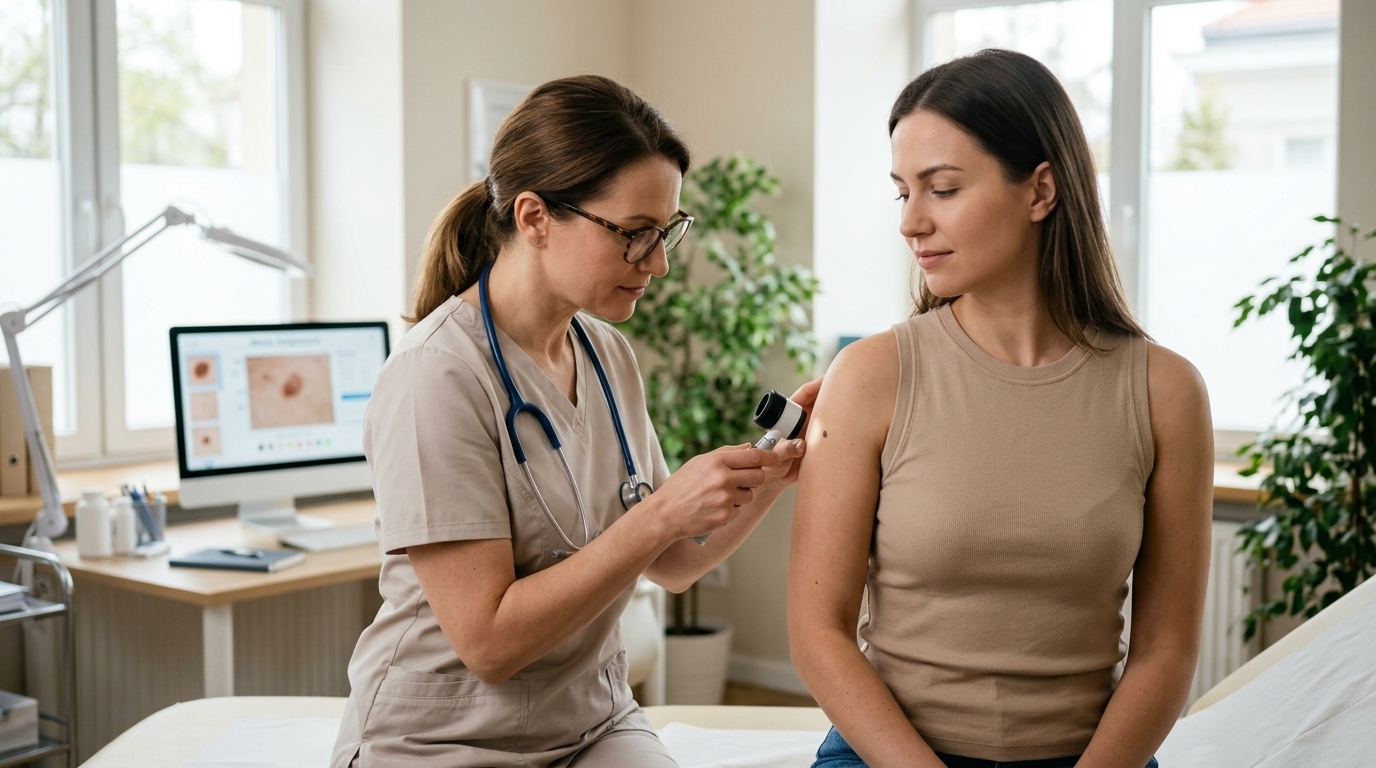
At Swiss Clinic, our dermatology services include general dermatological examinations, mole assessments using a handheld dermatoscope, treatment of acne, rosacea, eczema, and infectious skin conditions, sexually transmitted disease (STD) testing, and removal of certain benign skin lesions. Our current service offerings also include dermatological care for children.

Book by phone

Schedule your appointment quickly and easily by speaking directly with our team:

+36 1 225 0566

Instant online booking

Don't want to wait? Book your appointment now and receive instant confirmation!

Book an appointment
Bőrgyógyászati szakrendelés és dermatoszkópos vizsgálat

Important information before your dermatology appointment

During a dermatological examination, the appearance of a skin lesion and how it has changed over time often provide the most valuable diagnostic information. For this reason, it is particularly helpful to gather a few important details before your appointment.

What should you know before your appointment?

  • Take photographs if your skin symptoms come and go: Rashes, hives, redness, or swelling may partially or completely disappear by the day of your appointment. Clear, well-lit photographs taken during an active flare-up can help your dermatologist see what the affected area looked like and how it has changed over time.
  • Avoid covering the area being examined with makeup or nail polish: If your appointment concerns facial skin, a pigmented lesion, or a nail problem, try to leave the affected area clearly visible. The American Academy of Dermatology also recommends removing makeup or nail polish from areas that will be examined.
  • Make a list of the products and medications you currently use: Creams, ointments, cosmetics, prescription dermatological medications, and dietary supplements may all be relevant. Be sure to mention if a particular product has improved or worsened your symptoms. Do not discontinue any prescribed medication before your appointment without consulting your physician.
  • For mole examinations, identify any lesions that have changed: If a mole has grown, changed shape or color, become itchy, or started bleeding, tell your dermatologist when you first noticed the change. If you have previously had a skin lesion removed or undergone a biopsy, it is also helpful to bring the pathology results.

When should you see a dermatologist?

Some skin symptoms are temporary, while others may require targeted treatment or further diagnostic evaluation. A dermatology consultation is particularly recommended in the following situations:

  • New or changing moles and pigmented skin lesions: If a mole changes in shape, color, size, or texture, looks different from your other moles, or begins to itch or bleed, a dermatological examination is recommended. Dermoscopy allows the dermatologist to examine the structure of the lesion in greater detail. A new, changing, or unusual skin lesion can be an important warning sign of melanoma.
  • Persistent, recurring, or intensely itchy skin rashes: Eczema, contact dermatitis, psoriasis, infections, and many other skin conditions can cause redness, scaling, or itching. Appearance alone is not always sufficient to determine the underlying cause, so persistent or recurring symptoms should be evaluated by a dermatologist.
  • Acne-prone, inflamed, or scar-prone skin: Acne is not limited to adolescence. If inflammation becomes severe, painful nodules develop, scarring begins, or over-the-counter treatments do not provide sufficient improvement, dermatological treatment may help reduce symptoms and minimize the formation of new scars.
  • Warts, fungal infections, or other suspected skin infections: Spreading warts, persistent scaling or itching, nail abnormalities, or other signs of infection may require an accurate diagnosis. Different skin conditions can look similar but require very different treatments.
  • Genital skin lesions or suspected sexually transmitted infections: A dermatology and venereology consultation may be recommended if you experience a rash, sore, blister, wart, or unusual discharge, or following potentially high-risk sexual contact, even if you have no noticeable symptoms. Swiss Clinic's current services include specialist STD consultations and follow-up appointments.

Available dermatology examinations and treatments

Dermatology encompasses a wide range of conditions, and not every concern requires the same examination or treatment. In addition to specialist consultations, Swiss Clinic currently offers dermoscopic mole examinations, sexually transmitted infection (STI) services, pediatric dermatology, and various minor dermatological procedures. The availability of specific treatments and procedures may vary by location.

General dermatology consultation

During your consultation, the dermatologist will carefully review when your symptoms began, how long they have been present, any previous treatments, and the products or medications you use regularly. The specialist will then examine your skin and, depending on your concerns, may also assess your hair, scalp, or nails. Additional laboratory testing, tissue sampling, histopathological examination, or consultation with another medical specialist may be recommended when necessary. Not all skin symptoms are caused by an underlying internal medical condition, so further investigations are selected based on your medical history and dermatological findings.

Why choose Swiss Clinic?

Dermatological concerns can range from sudden skin rashes to chronic skin conditions that have persisted for years. At Swiss Clinic, general dermatology consultations can be complemented by dermoscopic mole examinations, sexually transmitted infection (STI) testing, pediatric dermatology, and, when necessary, tissue sampling or minor dermatological procedures.

Book an appointment

Targeted mole examinations

Handheld dermoscopy allows specialists to examine pigmented and other skin lesions in greater detail and determine whether further monitoring or removal is necessary.

Comprehensive skin, hair, and nail care

Our dermatology consultations cover a wide range of concerns, including acne, rosacea, eczema, infectious skin conditions, warts, and hair and nail abnormalities.

Skin lesion treatment and removal

Our current services include various minor dermatological procedures, skin lesion removal, punch biopsies, and histopathological examinations. Availability may vary by clinic location.

Dermatology services in Budapest and Győr

Dermatology consultations are currently available at our Swiss Premium Health Centers in Buda, Pest, Újbuda, and Pest 2, as well as at Swiss Miniclinic Győr.

AIPDerm · Digital dermatology

Dermatology consultations
from home, with results within three days

AIPDerm, the digital dermatology clinic developed by Swiss Clinic and AIP Labs, makes specialist skin assessments accessible from home. All you need is a photo of the affected skin area, and your diagnosis is guaranteed within three days.

The platform uses artificial intelligence to support physicians in making faster, more accurate clinical decisions. Every final diagnosis is reviewed and approved by a medical specialist. This innovative approach makes dermatology consultations available at a significantly lower cost than traditional services, accessible from your smartphone, tablet, or computer, every day of the year.

0+ recognizable skin conditions
0% dermatological coverage
0 days to receive your diagnosis
0 HUF total consultation fee
AIPDerm digitális bőrgyógyászati vizsgálat applikáció

Artificial intelligence with human oversight

Every diagnosis is approved by a medical specialist. Technology makes the process faster, but the final decision is always made by a physician.

The same skin symptom can indicate several different conditions

Many skin diseases present with similar outward symptoms. Redness, scaling, or itching can be caused by eczema, infections, irritation, or other inflammatory skin disorders. Similarly, evaluating a pigmented lesion involves far more than just size: shape, color, structural patterns, and especially changes over time are critical factors.

Therefore, the purpose of a dermatology evaluation is not merely treating visible symptoms, but identifying the exact underlying condition and determining whether further diagnostics are warranted. While clinical examination alone is sufficient in some cases, dermoscopy, laboratory testing, microbiological cultures, or histopathology may provide vital diagnostic clarity in others.

Have you noticed a new or changing mole, persistent rash, acne, itchy skin, or other skin lesion? A specialist dermatology examination can clarify the root cause and determine the most appropriate diagnostic or treatment plan.

Key specialties and diagnostic areas:

Moles and skin lesions

  • Examination of moles and pigmented lesions
  • Evaluation of new or changing skin growths
  • Handheld dermoscopic examination
  • Surgical excision and histopathological analysis when indicated

Inflammatory and infectious skin conditions

  • Acne and blemish-prone skin
  • Eczema and atopic dermatitis
  • Rosacea and persistent facial redness
  • Fungal infections, warts, and other infectious skin lesions

Dermatology and venereology

  • Diagnostic evaluation of sexually transmitted infections
  • Assessment of symptoms and exposure history
  • Targeted swab sampling and lab testing as indicated
  • Treatment plans and follow-up care based on test results

Don't let your symptoms leave you with unanswered questions

Our experienced medical specialists and advanced diagnostic technology can help identify the underlying causes of your symptoms. Choose an appointment time that works best for you.

Frequently asked questions

Answers to the most common questions about our dermatology services.

Not every patient needs mole examinations at the same frequency. The recommended schedule depends on several factors, including the number and appearance of your moles, previous skin lesions, your personal and family medical history, and other individual risk factors. If a new mole appears or an existing mole changes, becomes itchy, starts bleeding, or looks noticeably different from your other moles, you should not wait until your next scheduled checkup to have it examined.

A dermatologist uses a specialized magnifying and illuminating device called a dermatoscope to examine the structure of your moles in detail. The examination does not involve tissue sampling or radiation exposure. If a lesion appears suspicious, your dermatologist may recommend further monitoring or surgical removal followed by histopathological examination. Swiss Clinic currently offers both initial and follow-up mole examinations using a handheld dermatoscope.

No. A dermatologist should first evaluate the lesion through a clinical examination and, when appropriate, dermoscopy. Some moles may only require regular monitoring, while others may need to be removed and examined by a pathologist. It is particularly important to seek a dermatological evaluation if a lesion changes rapidly, bleeds, becomes itchy, or looks different from your other moles.

If your acne persists, painful or inflamed nodules develop, scarring begins, or your regular skincare routine and over-the-counter products do not provide sufficient improvement, it is worth consulting a dermatologist. Treatment depends on the type and severity of your acne. Certain dietary factors may influence symptoms, but acne cannot simply be attributed to a single food, a food intolerance, or stress alone.

Yes. Dermatology and venereology also cover the diagnosis and evaluation of sexually transmitted infections (STIs). The appropriate tests depend on whether you have symptoms, the type of sexual contact involved, and which infections are suspected. Depending on the circumstances, local sample collection, urine testing, or blood tests may be recommended. Swiss Clinic currently offers specialist consultations and follow-up appointments for sexually transmitted infections.